




This should not be relied on for up to date accuracy as it was posted in 2005 with a disclaimer at the end
 A guide
for holiday home owners from cotedazurrental.com
in association with jmlvillas.com
when letting out their Self Catering Holiday Vacation
Home in the South of France
A guide
for holiday home owners from cotedazurrental.com
in association with jmlvillas.com
when letting out their Self Catering Holiday Vacation
Home in the South of France
In 2001 euro-rentavilla.com was established for the marketing of self catering holiday rentals.
In 2002 a new site jmlvillas.com was established and this remained in business till May 2018.
As a result of the GDPR - General Data Protection Regulations legislation coming into force in May 2018, jmlvillas.com ceased to offer an advertising service for holiday home owners.
The guide below is from information provided from the jmlvillas.com site for property owners - It would now be out of date in the 2020s era
1) PRICES:
Make sure that the
price is competitive.
If the rental is too high it
will not attract visitors. Ensure that the prices
are kept up to date on your entry on jmlvilas.com
(jmlvillas.com is the website that advertises your
South of France holiday vacation rental property)
2) LOCAL AGENT: If
you do not live near the holiday property, you must
employ a good local agent who can check your visitors
in and out, arrange cleaning, routine repairs and
replacements, arrange linen hire or a laundry service
and keep an eye on the property when it is not occupied.
The agent should be able to provide a "Welcome
Pack" if you want to provide one - bottles of
wine for example or more if the visitors are arriving
late. You should provide your agent with the visitor's
contact details and vice versa so that they can contact
the agent if they are delayed or lost.
The agent can
of course be a friend or relative living locally,
but it should be a business relationship and the agent
should be paid.
3) RENTAL
AGREEMENT:
If you are letting a holiday
property in France you must provide a
written agreement. In other countries,
although it might not be a legal requirement
it is advisable so that your terms of
rental are clearly agreed.
The document need only be 2/3 pages in
length and include the names of the visitors,
the dates of the rental. The amount of
damage deposit you are going to hold,
The rental price, cancellation of rental
charges. Additional costs e.g. electricity,
linen hire etc.
A clause stating that if a local agent
has to meet the visitors at an unsocial
hour, then any additional costs paid to
the agent will be paid by the renter.
If it is a legal requirement in the country
concerned that the renter takes out insurance,
then add it into the agreement.
4) INVENTORY:
It is essential that you have an inventory
of the contents that can be checked in
with your guests. Either the owner or
local agent should politely point out
that if the visitors break equipment,
if they are glasses for example then they
should replace, if it is more serious
- bed, window etc, then immediately report
it.
5) PROPERTY HANDBOOK:
Provide a ring bound folder
with some notes about the property - how
the hot water system works, where the
rubbish should be put, information on
local shops, restaurants and attractions
etc.
6)
INSURANCE:
You must make sure that
your property is properly covered for
holiday lettings. You should advise the
insurance company that it is being let
for this purpose. In some countries (France
for example) the people renting must also
take out insurance by law, but you must
also be covered. If you are looking for
a policy visit our Insurance
section.
7) LOCAL REGULATIONS:
You
should ensure that your property complies
with the country regulations for safety
issues.
In Britain for example a holiday home
must have furniture that complies
with the fire & furnishing safety
regulations and displays the appropriate
safety label. There are also gas and safety
regulations in certain countries. If
in doubt talk to the local Tourist Office
in the area your property is located in.
In France, rental properties with more than 5 bedrooms are legally classified as a small hotel. Hotels are classified as public buildings requiring specific fire protection such as fire doors and officially approved smoke alarms. These regulations are enforced by the Mairie. Although there is no specific legislation for fire safety in in private properties or rental properties with less than five bedrooms in France, in any country the owner must have a duty of care to his/her guests and install basic fire protection such as smoke detectors, fire blankets and fire extinguishers. It is suggested that the emergency services numbers are included in any Property Handbooks.
Looking for Holiday homes insurance in the south of France? Click on the image below

8) TAX: It is advisable to consult an Accountant regarding any tax liability from letting out your holiday property. If the property is not the country you normally are resident in then contact an accountant in that country first. Many countries have Tax treaties with other ones, but the issue is very complex and the Tax Authorities do have ways of finding out about properties that are being let out.
See also: Taxe
de séjour and Tax
Declarations in France
These are two most important areas for
owners to take note of.
9) AVAILABILITY:
Ensure
that the Availability dates are kept up
to date on your entry on jmlvilas.com
10) PAYMENT OF RENT: Do take great care when accepting rental payments. Some people are able to accept credit card bookings, but for the majority they are dependent on payment by bank transfer or when the guests arrive. See Accepting Payments in Euros can prove Expensive
Take great care — if someone is making a booking well into the future, the ideal situation is to obtain a booking deposit at the time of booking and the balance two months before they are due to arrive. Stipulate those terms in your rental agreement and also on any printed booking forms.
11) PRE - LETTING CLEANING: -Make sure the property is clean and tidy before the guests arrive. At jmlvilas.com we have received complaints that the property was dirty and even someone still in there when a guest arrived in the early afternoon. Make arrangements to have the property cleaned thoroughly in between lets and if it stays vacant for a while between a let, have it cleaned before the new guests move in.
12)
SWIMMING POOLS:
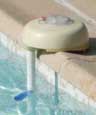 Remember that many countries
nowq have specific rules for swimming pools
(alarms / fencing in France). Ensure
you are properly insured, arrange for a
regular maintenance contractor to check
it and if it is a Communal pool remember
to advise your renter guests that it could
be closed for a maintenance project during
their stay. There are occasions when they
have to be drained or re-tiled and will
be out of use for several days)
Remember that many countries
nowq have specific rules for swimming pools
(alarms / fencing in France). Ensure
you are properly insured, arrange for a
regular maintenance contractor to check
it and if it is a Communal pool remember
to advise your renter guests that it could
be closed for a maintenance project during
their stay. There are occasions when they
have to be drained or re-tiled and will
be out of use for several days)
13)RECORD KEEPING FOR PROPERTY OWNERS: As a property owner ou are required to maintain complete records of all expenses incurred and the income received from your properties. This means that you must hang onto every relevant receipt and keeping details of any personal assets you used for the property business. An example of this would be to note down the details of all journeys you make concerning your property's business, the portion of your home used to process related paperwork and time spent on your computer carry out work for the property.
You should retain all bank statements and all records have to be retained for five years after the tax return filing date. Any receipts regarding property improvements should be kept for six years after the end of the tax year in which the property is sold. If you don't keep tax related records you could face a UK fine of £3,000. See also Tax Declarations in France
Please note this guide has been compliled
from experience and jml Property Services
takes no responsibility for the accuracy
of its content. jml
Property Services taks no responsibility
for any bookings or dealings between a renter
and a property owner.

St
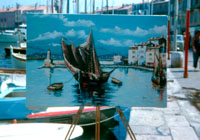
Tropez in the 1960s


Enjoy your stay in the South of France ....

eat - drink -stay & wake up on the Riviera
________________________________________________
See site Map for statutory information about jml Property Services Here