





 Find
more articles about the South of France Here
Find
more articles about the South of France Here
Driving in France / Monaco
 See
also: Buying and selling cars in France
See
also: Buying and selling cars in France
This information should not be relied on for accuracy as rules change all the time
6th January 2025: Unmarked vehicles equipped with speed cameras go into circulation - Cars equipped with speed cameras and run privately are to be introduced on our region's roads. This year the Provence Alpes Cote d'Azur region along with the Auvergne Rhone Alpes, will see cars deployed by private company OTC, which has been awarded a two-year public contract of almost 34.5 million euros. 126 unmarked vehicles will be in circulation with 5,000 check per day. Source - Riviera Radio Daily News
10th July 2023: Clean air stickers for British motorists driving UK registered vehicles- British drivers heading to France are being reminded that they will need to display a clean air sticker - called a Crit'Air vignette - if they plan to drive into several French cities.
Similar to the clean air and ultra-low emission zones that have sprung up in the UK, the French have at least 12 zones, including Paris, Rouen, Strasbourg, Toulouse, Montpellier, Lyon, Grenoble, Nice and Marseille, with more being added all the time, where you risk a fine if you don't display one.
The stickers are relatively easy and cheap to obtain, even if it requires a little bit of time and some internet expertise. UK drivers should log on to the official website Certificat-air.gouv.fr to apply.
Beware: there are a number of fake websites that will try to charge you more Source - Riviera Radio Daily News
Changes to French registration plates from 2009 Here
See also these two driving guides at the insurance4carrental.com site by clicking on an image above
_____________________________________________General
Driving Tips (some of this information supplied by Holiday
Autos)
Speed limits : Built-up-areas: 31mph/50kmh outside towns: 56mph/90kmh priority roads and toll-free motorways: 68mph/110kmh toll motorways: 81mph/130kmh
Speed
Cameras: 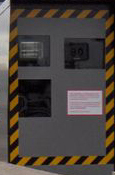 There
are more and more speed cameras in France (useful web site
is
controleradar.org/) They usually have a warning sign a
few metres or so before you see the camera and it is often
set on a dual carriageway in the central reservation to capture
traffic on both sides of the road. They are much nearer to
ground level than those found in Britain and Ireland. They
are often located on motorways on more dangerous sections
particularly when the speed limit is reduced to 110 kmh. Remember
if you are driving a hire car your fine will be passed onto
you by the car rental company.
There
are more and more speed cameras in France (useful web site
is
controleradar.org/) They usually have a warning sign a
few metres or so before you see the camera and it is often
set on a dual carriageway in the central reservation to capture
traffic on both sides of the road. They are much nearer to
ground level than those found in Britain and Ireland. They
are often located on motorways on more dangerous sections
particularly when the speed limit is reduced to 110 kmh. Remember
if you are driving a hire car your fine will be passed onto
you by the car rental company.
If you are driving on foreign plates, don't think you are safe from prosection now. A letter in the August/September 2007 edition of "The Riviera Reporter" concerned someone whose son had passed an Italian radar camera that flashed him. The fine was passed onto the French authorities to pursue via the local Prefecture. The same writer also knew of someone who had been speeding in Switzerland and the fine demand went overeas. According to The Riviera Reporter "Harmanisation and intra-EU cooperation is under way and not only fines will have to be paid, but soon points will be deducted from your licence no mater where the offence was committed. This will include offences in the UK and any other EU country as well as Switzerland"
Road offences between Italy and France - Riviera Radio Daily News reported on the 8th January 2016 that a new measure has been introduced concerning road offences in France and Italy. Both countries will work together and as of the 1st of January all French motorists who commit a driving offence in Italy will receive a fine by post at their French address. The same will apply to any Italian motorists fined in France.
In the April /May 2011 edition of The Riviera Reporter "Speed cameras The proximity of an automated camera radar trap is no longer automatically posted in France. Instead, zones where such traps are common will usually be signposted as much as 2 kilometres in advance rather than the 400 metres previously.
That leaves plenty of time to forget, so don’t. Over a thousand new speed cameras will be installed in France before 2012 adding to the 2800 already in place. More than 20 of these new cameras will be in Alpes- Maritimes including several in dense urban locations such as the Nice train station flyover"
Radar Detectors: It is illegal to use these and you can be fined up to 1,500 and lose 2 points of your license. However it is not illegal to download a map of where the speedcameras are from the French Government website www.securiteroutiere.equipment.gouv.fr
In the April / May 2011 edition of The Riviera Reporter"Time-lapse traps (radars tronçons), which measure average speed between two distant points, are being installed on major traffic arteries throughout France. This means that drivers can no longer slow down where they know there’s a speed camera only to accelerate afterwards. Licence plate recognition technology will be put to full use here. In the Bordeaux region they are testing a system that can recognise lorries and coaches which have different speed limitations from passenger cars" More information Here
 In
the February / March 2012 edition of this magazine (click
on image on left)
In
the February / March 2012 edition of this magazine (click
on image on left)
17 October 2019 - Speed cameras - Two speed cameras situated on the A8 motorway at Cagnes sue mer in the Alpes Maritimes and Les Adrets in the Var are amongst the top ten cameras which flash the most in France. According to the report there has been an increase in the number of motorist flashed in Cagnes sur mer following the lowering of the speed limit from 110km to 90km /h. Previous years had shown between 50,000 and 60,000 offenses however in 2018 the number jumped to 115,558. Source Riviera Radio Daily News
Radar detectors After much debate, devices that detect speed cameras are now formally forbidden. In theory, using a device that actively warns of cameras is now punishable with a €1500 fine and the loss of six points. It is generally accepted that passive devices which show known speed camera positions without detecting them actively are acceptable if they are dubbed "danger zone warning devices". In 2012, 400 new fixed radar traps will be installed and there will no longer be advance-warning panels on roads equipped with them.
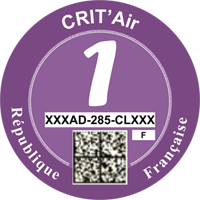 France
introduced environmental zones and the Crit'Air Vignette on
1st July 2016
France
introduced environmental zones and the Crit'Air Vignette on
1st July 2016
Environmental zones in France - Holidaymakers risk financial charges! There is a new vignette/sticker for Paris, Lyon and Grenoble. They are first three cities to introduce emissions stickers for all vehicles and there are a lot of cities in France. Twenty two more cities are planning this.
On days when certain cities are at risk of reaching their Euro emissions limit heavy polluting vehicles can be refused entrance based on the "Crit'Air" sticker the vehicle is displaying. You can apply on line and visit their website here Classifications are based on age of vehicle, there are quite a lot of restrictions for older vehicles.
Presumably rental cars will be issued with these, but no doubt it could affect the hire costs as it another admin detail for them. Motorists driving without the Crit'Air sticker can be fined on the spot from €68 to €135 It will be interesting to see if other cities in different countries follow this system.
School buses must now be fitted with equipment that tests the driver's breath before allowing the vehicle to start. This is expected to be extended to include all buses within a couple of years.
Police (including municipal police) can now test drivers for narcotics, including cannabis. Driving while under the influence of drugs is sanctioned like alcohol-related offenses.
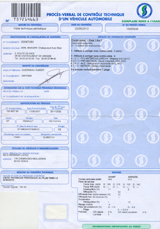 Contrôle Technique
- A vehicle's
first CT (MOT) must take place within 4 years of the1ère mise
en circulation shown on the registration paper. The CT is
then obligatory every 2 years for private vehicles and every
year for vehicles registered to a business.
Contrôle Technique
- A vehicle's
first CT (MOT) must take place within 4 years of the1ère mise
en circulation shown on the registration paper. The CT is
then obligatory every 2 years for private vehicles and every
year for vehicles registered to a business.
Camping vehicles must now have a pollution test every year. When you are registering a newly acquired car the CT must have been done within 6 months of purchase if the vehicle is more than 4 years old.
The contrôle technique 2012 looks at more items than previously and will take about 10 minutes longer and cost about €10 more. The speedometer must now be shown to function but its accuracy won't be tested. The horn must be in working order and its fixations will be verified. Brake fluid lines are now tested for cracks and potential leaks, as are power steering lines and fluid levels. Wheel bearings will now be checked for wear and excess play. Fog lights and rear windscreen anti-misting are now tested as well.
Lateral body parts such as rigid decorative door guards must be firmly installed with no risk of them coming off and injuring someone. All doors must now function so that passengers can escape in case of accident or fire. The petrol tank must be in good condition and not leak. The anti-theft steering wheel lock will now be verified to ensure there is no danger of it locking while the car is in motion.
The penalty for an outdated CT is €135 and results in immediate confiscation of the vehicle. The registration papers will be retained by police and you may then be granted a fiche de circulation provisoire allowing you seven days to get the car to a testing station. Once the car passes the CT, registration papers will be returned. Except for registered collectors' cars, even vehicles that are not used must now be tested although it's hard to see how this can be enforced. The new CT sticker shows the expiration date in much bigger letters than before so police can read it from a greater distance.
A valid contrôle technique is the only accepted indication that your tyres, brakes, lights and other safety features were working properly at the time of an accident. Without an up-to-date CT you can be held responsible for an accident even if, in theory, it isn't entirely your fault. This isn't new but it's something too many drivers ignore.
Mobile Phones: If you are found to have been using your mobile phone for speech or texting at the time of the accident you will almost certainly be considered at fault no matter what the other driver did. From 2012, the fine for using a mobile phone or texting while driving has been increased from €35 and a 2-point penalty to €135and 3 points.Source February 2012 - Riviera Reporter
Drink and driving: Blood alcohol limit is 50mg - barely 1 unit of alcohol. (0.5 grams of alcolol per litre of blood) In the UK it is 0.8.
 In-car alcohol tester / alcohol breathalyser From July
2012 it will be obligatory for all drivers in France to carry
a breathalyser (éthylotest) in the glove box (not in the boot).
Costs will be from €2
In-car alcohol tester / alcohol breathalyser From July
2012 it will be obligatory for all drivers in France to carry
a breathalyser (éthylotest) in the glove box (not in the boot).
Costs will be from €2
Update January 2013 - From Total website - En cas de contrôle routier, le défaut de possession d'un éthylotest serait sanctionné par une amende de 11 euros à partir du 1er mars 2013. Un décret a été publié en ce sens au Journal officiel du mardi 30 octobre 2012. L'éthylotest donne un indice de la présence d'alcool dans l'air expiré. En France, Il est interdit de conduire en cas de concentration d'alcool dans l'air expiré égale ou supérieure à 0,25 milligrammes par litre. Source : service-public.fr.
If you are stopped by traffic police, the lack of having a breathalyzer will mean you will be fined 11 euros from 1 March 2013 as per the decree that was published on Tuesday, October 30, 2012. The breath test gives an indication of the presence of alcohol in the breath. In France, it is forbidden to drive when alcohol concentration in exhaled air greater than or equal to 0.25 milligrams per liter. Source: service-public.fr.
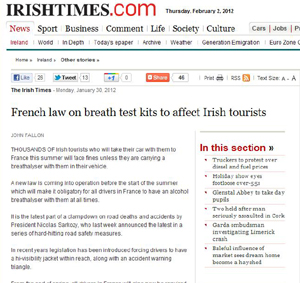
See: Breathalyser kits now obligatory in cars in France - check your hire car - July 2012
 New
Driving Laws in France -July 2012
New
Driving Laws in France -July 2012
Drink Drive laws in Italy Update. Italy Magazine's March 2009 edition reports that the new Codice della Strada (The Highway Code) has stated that if you drink more than three glasses of wine or more than one brandy you will not pass Police alcohol tests. Apart from having the driving license suspended up to a year, the vehicle can also be confiscated and sold by the state. Take care if you are taking a day trip into Italy from the South Of France.
Traffic on major roads has priority. Where two major roads cross, traffic coming from the right has priority as warned by the sign 'danger priorité à droite'. Where there is no sign, give way to the right.
Traffic on a roundabout has priority and signs saying 'cedez le passage' or 'vous n'avez pas la prioritè'. In some areas the old rule of traffic entering roundabouts having priority applies so be cautious where there are no signs
If a driver flashes his headlights in France, he is generally indicating that he has priority and you should give way. This can be confusing as in the UK it usually indicates that a car is usually indicates that a car is letting you out.
Stopping for someone waiting at a zebra crossing is a fineable offence for holding up traffic. The crossings indicate where is best to cross.
Do not overtake a tram when it is stationary with passengers alighting or boarding.
Traffic lights don't show amber after red. Flashing amber means continue with caution.
It is compulsory for front and rear seat occupants to wear seat belts if fitted.
Carrying hazard warning lights or a warning triangle is compulsory. It is recommended that visitors equip their vehicle with replacement bulbs. From July 2008 A reflective vest is also complusory (like in Italy and Spain - In Spain you must carry reflective vests for all occupants).In-car alcohol tester / alcohol breathalyser By spring 2012 it will be obligatory for all drivers in France to carry a breathalyser (éthylotest) in the glove box (not in the boot). Costs will be from €2
 Additional
driving Tips
Additional
driving Tips
Driving Licence: A valid driving licence - If it is issued in the UK and the driver has passed his / her driving test at 17, you cannot drive a car in France till you are 18. The minimum age for car rental is 21.
Motor
Insurance
Vehicle Registration Documentation: Take your vehicle registration document with you, but don't leave it in the car (in case the car is stolen). If the car does not belong to you you should have a letter of authority from the registered owner and a copy of the registration document.
Traffic Lights: Traffic light sequences are like those in Ireland, Spain, Belgium, Italy and many other European countries. They are unlike the UK in so much as when the light has gone red, instead of going to amber, they go straight to green. However they go from green to amber to red to stop traffic. You will often find that at night or at other quieter times some traffic lights flash amber from every direction. This means that no one has a right of way, but all drivers must proceed with caution.
Seat Belts: It is complulsory to wear seat belts in front and rear and children under ten years old are not allowed to travel in the front seat (unless there are no seats in the rear). In the rear they must use a proper restraint system - bolster cushion. If you are driving with a dog, it is advisable to harness the dog in using a special dog harness. A dog like a human that is not secure in the back can cause serious injury(or death) to the front seat people if it is not secured by a harness.
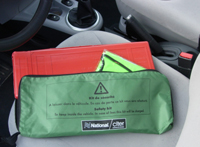 Warning Triangles - First Aid Kits - Fire Extinguishers
- Headlight convertors: These should
always be carried - many manufacturers issue them as standard.
In the event of a breakdown this should be displayed as well
as hazard warning lights. It is recommended that a first aid
kit be carried - again many manufacturers issue them as standard
and a fire extinguisher. If you are driving a right hand drive
car, you should put convertors on to stop dazzling oncoming
drivers .In-car alcohol tester / alcohol breathalyser
By spring 2012 it will be obligatory for all drivers in France
to carry a breathalyser (éthylotest) in the glove box, but
not in the boot. Costs will be from €2
Warning Triangles - First Aid Kits - Fire Extinguishers
- Headlight convertors: These should
always be carried - many manufacturers issue them as standard.
In the event of a breakdown this should be displayed as well
as hazard warning lights. It is recommended that a first aid
kit be carried - again many manufacturers issue them as standard
and a fire extinguisher. If you are driving a right hand drive
car, you should put convertors on to stop dazzling oncoming
drivers .In-car alcohol tester / alcohol breathalyser
By spring 2012 it will be obligatory for all drivers in France
to carry a breathalyser (éthylotest) in the glove box, but
not in the boot. Costs will be from €2
Motor cyclists: Motorcycles over 125cc must use dipped headlights during the day. A crash helmet is compulsory for driver and passenger.
Motorways - Autoroutes: The motoway network in France is excellent. The majority of the country is covered by pay autoroutes and in most places they accept credit / debit card payments at the pay points (Tolls) Péage. In many city areas the autoroute will be free in the zone around the city (not in Nice for example) and you will stop at a Péage to collect a ticket and stop at another at then of that section's toll road to pay. Most autoroutes are very well served by fuel stations, some with hotels. Approximately every 15 kilometres you will find an Aires - This is rest area with parking, tables and chairs for picnics and toilets, but no fuel. There are normally emergency telephones on the autoroute network every 2 km. These are orange and marked SOS.
It is illegal to drive on a French motorway at less than 80km/h (approx 50 mph) in the fast lane.
Fuel: Petrol - Essence | Unleaded - Sans Plomb (Green on pump handle)| Diesel - Gazole (Black on pump handle)| LPG - Gepel/GPL| Please note that most larger petrol stations will accept credit cards, however many of the automated ones will only accept a French one.
Changes to French registration plates from 2009 - Black on White registration plates on French cars from 2009.
From the 15th April 2009 the département number will no longer be on the French registration plate. The registration plates will no longer be black on white at the front and black on yellow at the rear as in the UK, but black on white on the front and rear as in Portugal, Ireland, Spain, Italy, Switzerland, Germany, Poland and many other European countries.
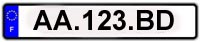 They
are made up of two letters, three numbers and two letters
these are separated by hyphens(e.g. DE-354-FG) and will be
allocated to a vehicle for life unlike presently if the owner
moves from département to département. The new plates do not
contain any element that identifies where the car owner lives.The
Government claimed that this would facilitate police dealing
with stolen or suspect vehicles. There was opposition from
the suppression of department numbers (75,62,48,06 etc) on
the registration plates and there was a Government climbdown.
They
are made up of two letters, three numbers and two letters
these are separated by hyphens(e.g. DE-354-FG) and will be
allocated to a vehicle for life unlike presently if the owner
moves from département to département. The new plates do not
contain any element that identifies where the car owner lives.The
Government claimed that this would facilitate police dealing
with stolen or suspect vehicles. There was opposition from
the suppression of department numbers (75,62,48,06 etc) on
the registration plates and there was a Government climbdown.
 A car owner may add the official logo of their a French département
to the their new style plate together with the département
number below it on the right hand side of the number plate.
This does not have to be the département where the owner lives.
A car owner may add the official logo of their a French département
to the their new style plate together with the département
number below it on the right hand side of the number plate.
This does not have to be the département where the owner lives.
Second hand cars: The new regulations apply to second hand cars from the 15th June 2009 will get these as well when la carte gris (registration document) is updated with a new address or owner.
If you are moving to France from another EU country uyou can keep your old British, Irish, German registration plates, but you must display where relevant Contrôle Technique. However if you are caught by a speed camera, don't think your foreign plates will help you.According to Transport Minister Dominique Bussereau the British are the worst followed by the Germans. Drivers will be tracked down to their French home address or via the home country of the registration plate.
Speed limits in France: Don't put yourself in the frame Stick to the speed limit in France, warns Chris Dearden of The Independent – foreign motorists are being targeted - October 2010 "a gendarme on his BMW motorbike overtook us and gestured for us to follow. Half a mile later, we turned in and parked alongside a dozen other cars, all caught in the same speed trap -My friend's on-the-spot fine had been €90, but a Dutch Audi driver had been relieved of €700, courtesy of a nearby cash machine. Working on an average fine of, say, €250, and 20 cars an hour, 10 hours a day, that speed trap could be pulling in €18m a year.
The French are un-ashamedly targeting foreign drivers with mobile speed traps along with instant on-the-spot penalties. And the penalties don't stop at relieving you of some of your holiday money, either. If you are 50kmh over the limit, your licence will be confiscated, posted back to Britain at some indeterminate date in the future, and your six-month ban on French roads starts immediately. Just in case your reaction to this possibility is to turn on your UK legal radar detector as you drive off the ferry, you need to remember that if caught, its use in France will bring about immediate arrest." Read the full article here October 2010 | Back to top
SEE ALSO Identifying car hire cars in France HERE
Driving in Monaco
According to the letter section of The Riviera Reporter (December 2008/January 2009 edition) A Monaco resident reported "I've just been told that Monaco registered cars can only be driven by the owner. This means that I can't allow my car to be driven by visiting friends or family as apparently they would't even be insured". The Riviera Reporter reply. "This stems from a modification to the highway code dated April 2008. According to insurance broker Eric Blair, who is in a better position than anyone to know the details concerning this situation, the new rules mean that any Monaco registered car can only be driven by the owner, their spouse/husband and children as they are declared Monaco residents and therefore "Carte de séjour" holders. Insurance wise, the policy could be considered as "nul and void" on the basis that if the driver at the time of an accident did not comply with local law, them the driver would be unauthorised to drive." The Riviera Reporter goes on to say "Eric is raising this matter with the Insurance Brokers?Agents Association to obtain their position. When The Riviera Reporter knows more they will print it.
€150 cash fine for going over red light in Monaco and €60 for going down wrong way on one way street. May 2010
Richard Sharpe was driving out of the Mone Carlo casino carpark and heading for the A8 autoroute. He misread the road and went through a red light. He was pulled over by a policeman who demanded an on the spot fine of one hundred and fifty euros in cash. He was told that unless he paid the money immediately the car would be impounded and he and his wife would not be allowed to leave Monaco. They had to go to an ATM to obtain the cash and pay it over. A receipt was issued. Another reader of The Independent Craig Brand reported in the 29th May 10 edition of Independent Traveller that after watching the Monaco Grand Prix, he left to go to Nice. He came to a roundabout and was confused by the road signs and ended up going down a one way street. Police immediatelt pounced and issued a €60 fine. Take great care when driving in Monaco. It could prove rather expensive.
Emergency Numbers: Ambulance (samu) 15
Fire (Pompiers) 18 Police 17 European Emergency 112
Police Municipale - Town & City areas
Police Nationale - local district area
Gendaramarie - Run by army deals with serious crime
Telephones in France - Mobile phones - All mobile phones start with 06. Calling a mobile from a land line can be very expensive. If you are visting France for a while instead of relying on your home country mobile you can buy a "nomad" Pay as you go sim card. You will need a French address.
Landline phones - The French telephone network is run by France Telecom. Peak hour (heures pleines) rates run from 8am - 7pm Mon-Fri. The weekends, national holidays & hours between 7pm & 8am are classed as off peak (heures creuses).
Some useful translation
Petrol Diesel & Service Sations
Service Station - la station service
Motorway Services - une aire de service
Rest area on motorway (Toilets, parking etc) - une aire de repos
Petrol - l'essence
Unleaded petrol - l'essence sans plomb
Diesel - le gasoil
To fill it up with fuel - faire le plein
Self service - libre-service
Check the tyre pressure - Vérifier la pression de pneus
Tyre checking station - serice de conflage
Roads (les routes)
Motorway - l'autoroute (A)
A-Road - la route nationale (N)
B-Road - la route départementale (D)
Toll Road - le péage
Emergency phone - une borne d'appel d'urgence
Traffic Lights - les feux
©jmlpropertyservices06/06/04/09
Hiring
a car / motorhome in the south of France? Don't forget to buy
your excess insurance in advance and save money. Find out more
at:
Other pages to see:
 Home Page Cote d'Azur Rental
 Historic
Monaco Grand Prix
Historic
Monaco Grand Prix
 Cannes
Film Festival
Cannes
Film Festival
 Jazz
à Juan
- Juan-les-Pins Jazz Festival
Jazz
à Juan
- Juan-les-Pins Jazz Festival
 Drive
along the corniches of the Riviera - Destination France - Spring
2012
Drive
along the corniches of the Riviera - Destination France - Spring
2012
 Provence
et Côte
D'Azur
- Destination France - Summer 2010
Provence
et Côte
D'Azur
- Destination France - Summer 2010
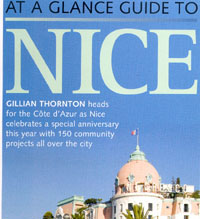 At
a Glance Guide to Nice - Destination France - Spring 2010
At
a Glance Guide to Nice - Destination France - Spring 2010
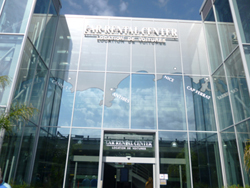 Nice
Airport Car rental terminal
Nice
Airport Car rental terminal
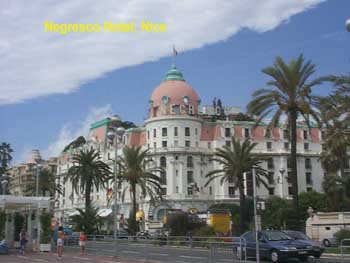 Fact
File Nice
Fact
File Nice

_________________________________________________



Enjoy your stay in the South of France ....

eat - drink -stay & wake up on the Riviera
________________________________________________
See site Map for statutory information about jml Property Services Here